Key Takeaways
- Ahrefs helps you find keywords, analyze competitors, monitor backlinks, and uncover SEO opportunities faster than manual research.
- Site Explorer, Keywords Explorer, Site Audit, Rank Tracker, and Content Explorer are the platform’s most valuable tools.
- While Ahrefs isn’t cheap, its competitor research and backlink data remain among the best in the SEO industry.
- If you’re serious about growing organic traffic, Ahrefs can save hours of research and help you make better SEO decisions.
Most SEO tools promise more traffic. Most fail to deliver.
Ahrefs is one of the few tools that has survived every Google update, every SEO trend, and every shiny new AI platform.
That’s why bloggers, affiliate marketers, agencies, SaaS companies, and enterprise brands continue paying hundreds of dollars per month for it.
But here’s the real question.
Do you actually need Ahrefs, or is it just another expensive SEO subscription?
In this guide, you’ll learn exactly what Ahrefs does, how its core features work, what it costs in 2026, where it shines, where it falls short, and whether it’s worth your money before you sign up.
What Is Ahrefs?
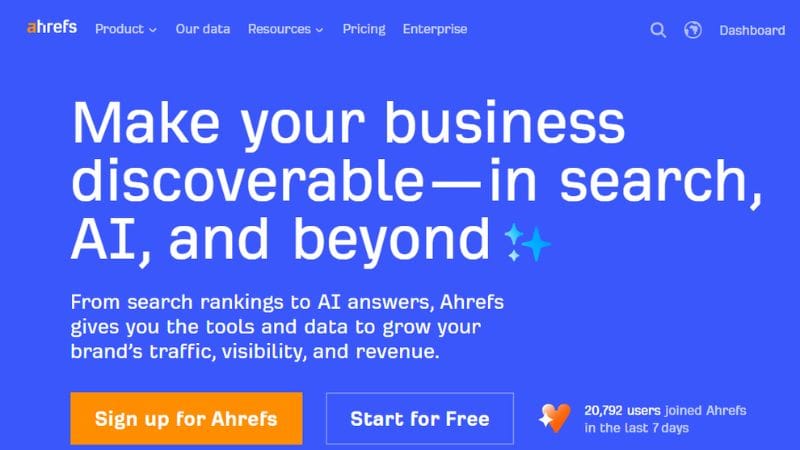
Ahrefs is an SEO and digital marketing platform that helps you find keywords, analyze backlinks, track rankings, audit websites, and study competitors.
Think of it as a search intelligence tool.
Instead of guessing why a page ranks on Google, Ahrefs shows you the data behind it. You can see which keywords drive traffic, where competitors get backlinks, which pages perform best, and what technical issues might be holding your site back.
Ahrefs first became popular for its backlink database. For years, SEO professionals used it to uncover link-building opportunities and reverse-engineer competitor strategies.
Today, it’s much more than a backlink checker.
The platform includes keyword research tools, content discovery features, rank tracking, technical SEO audits, competitor analysis, and AI search visibility reports.
At its core, Ahrefs helps answer four questions every website owner asks:
- What keywords should I target?
- Why are competitors ranking above me?
- Where are competitors getting backlinks from?
- What SEO issues are stopping my pages from performing better?
If you can answer those four questions accurately, SEO becomes far less about guesswork and far more about making informed decisions.
That’s exactly what Ahrefs is designed to do.
Who Is Ahrefs Built For?
Ahrefs is designed for people who make decisions based on search data, not guesswork.
If your goal is to grow traffic, find better keywords, analyze competitors, or improve rankings, you’ll likely find a use for it.
The platform is especially popular among:
- SEO specialists and consultants who need backlinks, keywords, and competitor data every day
- Bloggers and content marketers are building content strategies around search demand
- Marketing agencies managing multiple websites and client campaigns
- SaaS companies, ecommerce brands, and publishers competing in crowded search results
- Founders and small business owners who want to make smarter content and SEO decisions
- Digital PR and link-building teams researching outreach opportunities
That said, Ahrefs isn’t always the best starting point for everyone.
If you’ve just launched your first website and haven’t published much content yet, free SEO tools may be enough for now.
But once you’re serious about growing organic traffic and competing in search results, Ahrefs quickly becomes one of the most valuable tools in your marketing stack.
Ahrefs Core Tools Explained
The easiest way to think about Ahrefs is this. It’s not a single SEO tool; it’s an entire toolkit.
Each tool focuses on a different part of SEO: competitor research, keyword discovery, backlink analysis, rank tracking, and technical audits.
1. Site Explorer
This is the tool that made Ahrefs famous.
Enter any website or URL, yours or a competitor’s, and Ahrefs shows how it performs in search. You can see estimated organic traffic, ranking keywords, backlinks, top pages, traffic trends, and historical growth data.
In simple terms, Site Explorer helps you reverse-engineer what’s working for other websites.
What you can do with Site Explorer
- Find a competitor’s top-performing pages.
- See which keywords they rank for that you don’t.
- Analyze their backlink profile for link-building opportunities.
- Track whether their organic traffic is growing or declining.
- Identify which content categories or subfolders drive the most traffic.
A real-world example
Imagine you run a personal finance blog. You plug a competitor into Site Explorer and discover that most of their traffic comes from “best credit cards” listicles. You haven’t covered that subtopic yet. That’s an immediate content opportunity backed by real search data.
Also, check: I Started a WordPress Blog Like This
When to use it
- Researching competitors
- Auditing a domain before buying it
- Studying why a website is ranking in your niche
- Finding backlink opportunities
- Validating content ideas before writing
One thing to keep in mind
Ahrefs traffic numbers are estimates, not exact analytics data. They’re extremely useful for spotting trends and opportunities, but don’t treat them as literal Google Analytics numbers.
2. Keywords Explorer
If Site Explorer helps you understand competitors, Keywords Explorer helps you understand what people are searching for.
Enter a keyword, topic, or seed phrase, and Ahrefs generates thousands of keyword ideas along with search volume, keyword difficulty, traffic potential, and detailed SERP data.
For beginners, two metrics matter more than anything else.
Keyword Difficulty (KD)
Keyword Difficulty estimates how hard it would be to rank on the first page of Google for a keyword.
The score ranges from 0 to 100 and is primarily based on the backlink profiles of the pages currently ranking.
A keyword with a KD of 10 is generally much easier to target than one with a KD of 70.
That said, don’t chase low KD scores blindly. Some low-difficulty keywords have very little search demand. The goal is to find opportunities where competition is manageable and traffic potential is worthwhile.
Traffic Potential
This is one of Ahrefs’ most useful metrics.
Instead of focusing on the search volume of a single keyword, Traffic Potential estimates how much total traffic you could earn by ranking for the broader topic.
That’s important because Google rarely ranks a page for just one keyword.
For example, an article targeting “best protein powder for women” may also rank for dozens of related searches, including “protein powder for female athletes,” “best whey protein for women,” and similar variations.
Traffic Potential attempts to reflect that reality.
How I Use It
When planning content, this is usually the first tool I open.
I look for topics with realistic competition, strong traffic potential, and enough depth to build supporting content around them. Once I find those opportunities, I group them into topic clusters and prioritize them based on my site’s authority and goals.
One Limitation to Know
Keyword data is estimated, not pulled directly from Google.
Most of the time, it’s directionally accurate, but some niche or long-tail keywords can show misleading search volumes. For important decisions, it’s smart to validate opportunities using Google Search Console and actual search results.
3. Site Audit
Site Audit is Ahrefs’ technical SEO tool.
It crawls your website much like a search engine crawler and highlights issues that could affect your rankings, indexing, or overall site health.
That includes:
- Broken links
- Redirect chains
- Orphaned pages
- Duplicate content
- Missing meta descriptions
- Slow-loading pages
- Crawlability issues
- Indexing problems
- Hreflang errors for multilingual websites
The goal isn’t to make your site perfect.
The goal is to identify technical problems that could stop Google from discovering, crawling, or properly understanding your content.
Why It Matters
You can publish the best content in your industry and still struggle to rank if search engines can’t access or process your pages efficiently.
Technical SEO issues often go unnoticed because visitors don’t always see them. Search engines do.
A Real Example
Imagine you redesign your website and change dozens of URLs.
Traffic suddenly drops.
A Site Audit reveals that many old URLs are returning 404 errors instead of properly redirecting to the new pages. Fixing those redirects can restore lost crawl paths and help search engines understand the new site structure.
Who Gets the Most Value From It?
- Blogs with a large content library
- Ecommerce stores with hundreds or thousands of product pages
- Publishers managing complex site structures
- Any website that has recently migrated, rebranded, or changed its URL structure
One Tip Most Beginners Miss
Don’t try to fix every warning the tool reports.
Some recommendations are low impact, while others can directly affect rankings and indexing.
Start with crawlability issues, indexing problems, broken internal links, and major redirect errors. Those tend to have the biggest impact.
4. Rank Tracker
Rank Tracker shows how your rankings change over time.
You add the keywords that matter to your website, and Ahrefs monitors where your pages appear in search results. It can also track competitors, giving you a side-by-side view of who’s gaining or losing visibility.
At first glance, that might sound simple.
But ranking data becomes powerful when you look at trends instead of snapshots.
Why It Matters
Checking a keyword ranking once tells you where you are today.
Tracking it for months shows whether your SEO strategy is actually working.
For example, imagine a page is ranking at position #8 for an important keyword. After updating the content, it gradually climbs to position #3 over the next few weeks.
That’s a sign your optimization efforts are paying off.
On the other hand, if a page drops from page one to page three, Rank Tracker helps you catch the problem early before it starts affecting traffic.
What You Can Use It For
- Monitoring your most important keywords
- Measuring the impact of content updates
- Tracking competitor visibility
- Identifying ranking drops before they become traffic losses
- Reporting SEO progress to clients or stakeholders
One Thing to Keep in Mind
Ranking positions are updated weekly on standard plans.
For most bloggers and businesses, that’s more than enough. But if you’re managing time-sensitive campaigns where daily ranking movements matter, you’ll want to review your tracking options carefully.
Best Practice
Avoid tracking hundreds of keywords just because you can.
Instead, focus on the 20 to 50 keywords that directly support your content strategy, products, services, or business goals.
A small list of meaningful keywords is usually more valuable than a giant list you’ll never analyze.
5. Content Explorer
Content Explorer is one of Ahrefs’ most overlooked features.
Think of it as a search engine for content marketers.
Enter a topic, keyword, or phrase, and Ahrefs pulls up thousands of published pages related to that subject, along with metrics like estimated traffic, backlinks, referring domains, and social engagement.
Instead of guessing what type of content works, you can see what’s already attracting attention in your niche.
Also, read: Most Beginners Fail Because of This One Niche Mistake
What You Can Do With It
- Discover the most successful content on a topic
- Find articles that consistently attract backlinks
- Identify content formats that perform well in your industry
- Research link-building opportunities
- Find broken pages for broken link building campaigns
- Validate content ideas before investing time in creating them
A Real Example
Let’s say you’re a food blogger considering a guide on meal prep for beginners.
Before writing anything, you search the topic in Content Explorer.
You discover that several articles receive steady organic traffic and have earned hundreds of backlinks from other websites.
That’s a strong signal that the topic has both audience demand and link-building potential.
Why Content Marketers Love It
Most keyword tools tell you what people search for.
Content Explorer helps you understand what people actually engage with once content is published.
That makes it useful for planning articles, building content calendars, and finding ideas that have already proven themselves in the real world.
One Thing to Remember
Content Explorer is best used for research and validation, not copying competitors.
The goal isn’t to recreate what’s already ranking.
The goal is to identify successful patterns and create something more useful, more current, or more comprehensive.
Newer Ahrefs Features You Should Know About
For years, Ahrefs was known primarily as an SEO platform.
But search is changing.
People are increasingly getting answers from AI tools instead of traditional search results, and Ahrefs has started adapting its platform to that reality.
Here are some of the newer features worth knowing about.
Brand Radar
Brand Radar helps you understand how often your brand appears in AI-generated answers.
Instead of tracking only Google rankings, it monitors visibility across AI-powered search experiences and conversational prompts.
This matters because more users are discovering products, services, and websites through tools like ChatGPT, Gemini, and Perplexity without ever clicking a traditional search result.
If your competitors are being mentioned and you’re not, that’s a visibility problem worth paying attention to.
Web Analytics
Ahrefs now includes its own website analytics platform.
It’s designed as a privacy-friendly way to monitor traffic and user behavior directly inside the Ahrefs ecosystem.
While it doesn’t replace Google Analytics for advanced reporting, it’s convenient for users who want basic performance data without switching between multiple tools.
Google Business Profile Monitor
Businesses that depend on local search can use this feature to monitor their Google Business Profile performance.
For local SEO campaigns, visibility in Google Maps can be just as important as traditional organic rankings.
Social Media Manager (Beta)
Ahrefs has also started moving beyond pure SEO.
Its Social Media Manager allows users to schedule and publish social content from within the platform.
It’s still an early-stage feature, but it signals that Ahrefs is gradually becoming a broader marketing platform rather than just an SEO tool.
AI Content Helper
This feature analyzes content against search intent and competing pages.
It can highlight content gaps, suggest improvements, and help teams optimize articles before publishing.
For websites producing content at scale, it can speed up parts of the editorial process.
Do Beginners Need These Features?
Probably not right away.
Most users will spend the vast majority of their time inside Site Explorer, Keywords Explorer, Site Audit, and Rank Tracker.
Think of these newer tools as useful additions rather than the main reason to subscribe to Ahrefs.
Ahrefs Pricing Plans (2026)
This is the section most people jump to first.
And for good reason.
Ahrefs is one of the most powerful SEO platforms available today, but it’s also one of the more expensive options on the market. Many first-time users underestimate how quickly usage limits and add-ons can affect the total cost.
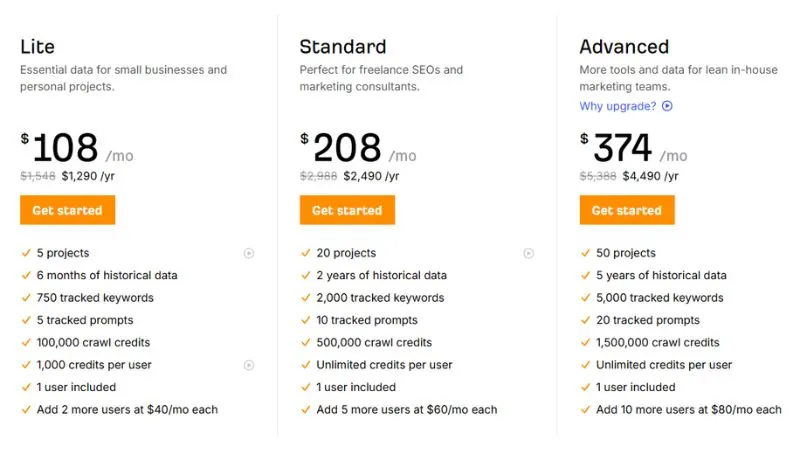
Here’s what each plan actually looks like in practice.
Ahrefs Free
Best for: Website owners who want basic SEO insights without spending money.
The free plan gives you limited access to Site Audit and Site Explorer for websites you own and verify.
You won’t get competitor research or deep keyword analysis, but it’s a solid starting point for monitoring your own site.
Ahrefs Starter ($29/month)
Best for: Curious beginners who want to test the platform before committing to a larger plan.
You get access to the core tools, including Keywords Explorer, Site Explorer, Rank Tracker, Site Audit, and Alerts.
The catch is that usage is heavily restricted.
For occasional research, it’s fine. For active SEO work, you’ll likely hit limits quickly.
Ahrefs Lite ($129/month)
Best for: Bloggers, affiliate marketers, freelancers, and small website owners.
This is the first plan that feels practical for real SEO work.
You can run projects, track rankings, audit sites, and perform competitor research without feeling completely restricted.
That said, power users will eventually notice the credit limits and project caps.
Ahrefs Standard ($249/month)
Best for: Professional SEOs, consultants, and growing agencies.
If you’re unsure which paid plan to choose, this is usually the safest recommendation.
The biggest advantage is unlimited credits per user, which removes much of the usage anxiety found in lower-tier plans.
For many SEO professionals, this is where Ahrefs starts to feel truly unrestricted.
Ahrefs Advanced ($449/month)
Best for: In-house marketing teams and larger organizations.
The higher project limits, keyword tracking capacity, and historical data access make it a better fit for companies managing multiple websites and larger SEO campaigns.
Ahrefs Enterprise ($1,499/month)
Best for: Large agencies and enterprise organizations.
This plan focuses on scale, collaboration, security, API access, advanced forecasting, and custom limits.
Unless you’re managing SEO across large teams or enterprise-level websites, you probably won’t need it.
Pricing Summary Table
| Plan | Price/Month | Projects | Tracked Keywords | Crawl Credits | Historical Data |
|---|---|---|---|---|---|
| Free | $0 | Verified only | Limited | Limited | Limited |
| Starter | $29 | Limited | Limited | Limited | Limited |
| Lite | $129 | 5 | 750 | 100,000 | 6 months |
| Standard | $249 | 20 | 2,000 | 500,000 | 2 years |
| Advanced | $449 | 50 | 5,000 | 1,500,000 | 5 years |
| Enterprise | $1,499 | 100+ | From 10,000 | From 5M | Unlimited |
Before You Subscribe
A couple of things are worth knowing before you pay for Ahrefs.
- Choosing annual billing can reduce the overall cost by up to 17% compared to paying month-to-month.
- Ahrefs generally does not offer refunds once a subscription is purchased.
- Unlike many SaaS tools, Ahrefs does not provide a traditional free trial for the full platform.
- If you want to test the platform first, your best option is Ahrefs Free, which includes limited access to selected features for verified websites.
In other words, make sure you’re comfortable with the plan you’ve chosen before subscribing. Since there isn’t a full-featured trial period, it’s worth reviewing the limits and features carefully in advance.
Ahrefs Free Tools: What Can You Use Without Paying?
One thing many people don’t realize is that you don’t need a paid Ahrefs subscription to use some of its most useful tools.
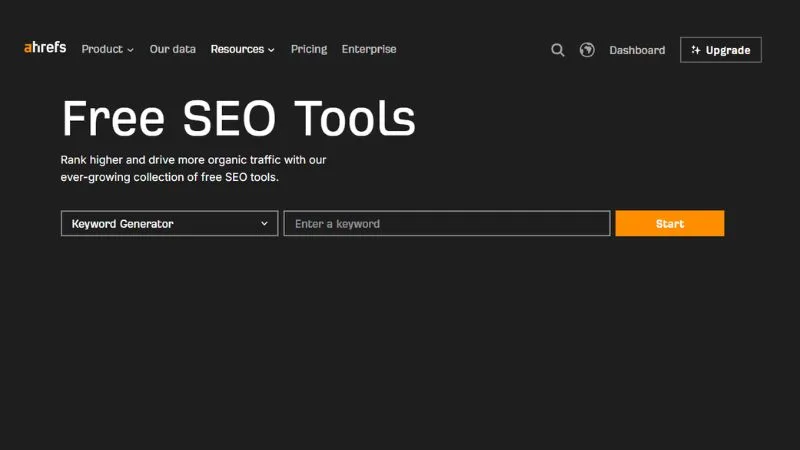
Ahrefs offers several free SEO tools that can help with keyword research, backlink analysis, SERP research, and website audits.
Some of the most popular include:
- Backlink Checker. View the top backlinks pointing to any website or page.
- Keyword Generator. Discover keyword ideas for Google, YouTube, Bing, Amazon, and other search engines.
- SERP Checker. Analyze search results for any keyword in almost any country.
- Website Authority Checker. Check a site’s Domain Rating (DR).
- Broken Link Checker. Find broken outbound links on a webpage.
- AI Visibility Checker. See whether a brand appears in AI-generated search answers.
- SEO Audit Tool. Run a basic technical SEO check on a website.
- Keyword Rank Checker. Check where a URL ranks for a specific keyword.
- Keyword Difficulty Checker. Estimate how difficult it may be to rank for a keyword.
Are the Free Tools Worth Using?
Absolutely.
While they don’t replace the full Ahrefs platform, they’re surprisingly useful for quick research, competitor analysis, and learning how SEO data works.
If you’re new to SEO, I’d actually recommend spending time with these free tools before paying for a subscription.
You’ll get a feel for how Ahrefs collects and presents data, and you’ll have a much clearer idea of whether the paid plans are worth the investment for your specific needs.
Ahrefs vs Semrush: Which One Is Better?
This is the comparison everyone asks about. Here’s my take after using both.
| Feature Area | Ahrefs | Semrush |
|---|---|---|
| Backlink Analysis | Stronger, more trusted index | Good, slightly less depth |
| Keyword Research | Excellent, especially Traffic Potential metric | Excellent, larger keyword database |
| Competitor Research | Best-in-class Site Explorer | Very strong, similar capability |
| Technical SEO | Good Site Audit | Very comprehensive |
| PPC/Ads Data | Basic | Much stronger |
| Content Tools | Content Explorer is unique | SEO Writing Assistant is more mature |
| Reporting/Dashboards | Improving but limited | More advanced custom reporting |
| Local SEO | GBP Monitor (beta) | More established local features |
| AI Search Visibility | Brand Radar (strong) | Catching up |
| Price | Starts at $129/month | Starts at $139.95/month |
| Ease of Use | Slightly cleaner UI | Steeper learning curve |
| Free Version | Yes (Webmaster Tools) | Yes (limited) |
Choose Ahrefs If…
- Your focus is SEO rather than PPC
- Backlink research is a major part of your strategy
- You spend a lot of time analyzing competitors
- You want a cleaner, more intuitive interface
- You care about Traffic Potential and content-driven SEO
Choose Semrush If…
- You run both SEO and PPC campaigns
- You need advanced reporting and client dashboards
- Local SEO is a major revenue driver
- You want a broader all-in-one marketing platform
My Verdict
If I could only keep one tool for pure SEO work, I’d probably choose Ahrefs.
Site Explorer, backlink analysis, and Traffic Potential remain some of the strongest features available in any SEO platform today.
That said, Semrush is often the better choice for marketers who need PPC research, reporting, social media tools, and a wider digital marketing toolkit.
In simple terms:
Ahrefs feels like an SEO specialist.
Semrush feels like a digital marketing platform that happens to include excellent SEO tools.
Ahrefs Pros and Cons
No SEO tool is perfect, and Ahrefs is no exception.
After using it for competitor research, keyword analysis, content planning, and technical audits, here’s where I think it shines and where it falls short.
Pros
1. Outstanding competitor research
Site Explorer remains one of the most powerful competitor analysis tools available. It’s often the fastest way to understand why another website is outperforming yours.
2. Industry-leading backlink data
Ahrefs built its reputation on backlinks, and its link database is still among the most trusted in SEO.
3. Traffic Potential is genuinely useful
Instead of focusing on a single keyword’s search volume, Ahrefs helps you evaluate the broader traffic opportunity behind a topic.
4. Clean and easy-to-use interface
Most reports are easy to navigate, load quickly, and don’t overwhelm users with unnecessary complexity.
5. Excellent educational content
The Ahrefs blog, Academy, and YouTube channel are valuable resources even if you never become a paying customer.
6. Strong early move into AI search
Features like Brand Radar position Ahrefs well for a future where AI-generated answers play a bigger role in content discovery.
Cons
1. Expensive for beginners
The platform delivers value, but the monthly cost can be difficult to justify if you’re still learning SEO or running a small website.
2. Lower plans feel restrictive
Many active users outgrow the Lite plan quickly and end up upgrading sooner than expected.
3. No traditional free trial
You can’t fully test the platform before paying, which remains one of the biggest complaints among potential customers.
4. Traffic estimates aren’t perfect
Like every third-party SEO tool, Ahrefs relies on modeled data. Use traffic estimates as directional indicators rather than exact numbers.
5. Weekly rank tracking by default
For most users, this is fine, but agencies and fast-moving campaigns may prefer more frequent updates.
6. Reporting options improve at higher tiers
Advanced reporting capabilities often require more expensive plans or paid add-ons.
How to Use Ahrefs as a Beginner: A Simple Workflow
One of the biggest mistakes beginners make is trying to use every feature inside Ahrefs.
Don’t.
Focus on the few activities that actually help you grow traffic.
Here’s the workflow I’d follow if I were starting a new blog today.
Step 1: Set Up Your Project
Create a project for your website and connect to Google Search Console if possible.
This combines Ahrefs data with your real search performance data, giving you a much clearer picture of what’s happening on your site.
Step 2: Study Your Competitors
Before creating content, understand what’s already working in your niche.
Open Site Explorer and analyze 2-3 competing websites.
Pay attention to:
- Their top-performing pages
- Their highest-traffic keywords
- Their backlink sources
- Content categories that generate the most visibility
You’re looking for patterns, not individual keywords.
Step 3: Build a Keyword List
Open Keywords Explorer and start researching topics related to your niche.
For newer websites, focus on:
- Lower Keyword Difficulty scores
- Topics with reasonable Traffic Potential
- Keywords that can be grouped into related clusters
Build a list of 20-30 content ideas before you write anything.
Step 4: Publish Content
Now turn those keyword opportunities into useful content.
Focus on solving problems better than the pages already ranking.
Don’t publish random articles. Publish content that directly supports the keyword strategy you built in the previous step.
Step 5: Run a Site Audit
Once content starts accumulating on your site, run a Site Audit.
Fix major issues first:
- Broken links
- Indexing problems
- Crawl errors
- Important missing metadata
Ignore minor warnings unless they affect performance or discoverability.
Step 6: Track Rankings
Add your primary keywords to Rank Tracker.
Check progress weekly rather than daily.
The goal is to identify long-term trends, not obsess over every ranking fluctuation.
Step 7: Monitor Backlinks
Review your backlink profile every month.
Watch for:
- New links you’ve earned
- Lost links worth reclaiming
- Competitors are gaining links from websites that haven’t linked to you yet
Over time, this becomes one of the easiest ways to discover new link-building opportunities.
The Goal
Keep it simple.
Research competitors, find keywords, publish content, fix important technical issues, track rankings, and monitor backlinks.
That’s the core Ahrefs workflow that drives results for most websites.
Is Ahrefs Right for Bloggers, Freelancers, and Small Businesses?
The value of Ahrefs depends less on who you are and more on how serious you are about SEO.
Here’s how I look at it.
For Bloggers
If organic traffic is a major part of your growth strategy, Ahrefs can be one of the most valuable tools you’ll pay for.
The biggest benefits are:
- Finding low-competition keywords
- Discovering content gaps
- Analyzing competitors
- Monitoring backlinks and rankings
That said, not every blogger needs a paid subscription.
If your blog is brand new and you’re still publishing your first few dozen articles, free tools and Google Search Console may be enough.
Once you’re actively investing in content and SEO, Ahrefs starts making a lot more sense.
My recommendation: Start with Ahrefs Free or Starter. Upgrade to Lite when SEO becomes a consistent part of your workflow.
For Freelancers and SEO Consultants
Ahrefs is often easiest to justify when client work is involved.
A single competitor analysis, content strategy project, or SEO audit can generate enough value to offset the monthly subscription cost.
For active client work, the Standard plan is usually the practical starting point.
Features like Batch Analysis, Content Explorer, historical data, and unlimited user credits make day-to-day SEO work significantly easier.
My recommendation: Most freelance SEOs will outgrow Lite quickly and be happier on Standard.
For Small Businesses
Small businesses should evaluate Ahrefs based on competition, not company size.
If you’re competing against established websites in a crowded niche, Ahrefs can help uncover opportunities that would be difficult to find manually.
On the other hand, if you’re a local business in a low-competition market, the free tools may cover a surprising amount of what you need.
My recommendation: Invest in Ahrefs when organic search is an important growth channel, not simply because everyone else in SEO uses it.
The Short Version
- New blogger → Free or Starter
- Growing blogger → Lite
- Freelance SEO → Standard
- Small local business → Free tools or Lite
- Competitive ecommerce or SaaS business → Standard or higher
The more your revenue depends on search traffic, the easier it is to justify Ahrefs.
Common Beginner Mistakes When Using Ahrefs
Ahrefs can save you hundreds of hours of SEO research.
It can also send you in the wrong direction if you misunderstand the data.
These are the mistakes I see beginners make most often.
1. Treating Traffic Estimates as Exact Numbers
Ahrefs doesn’t have direct access to a website’s Google Analytics account.
All traffic figures are estimates based on clickstream data and proprietary models.
A page showing 5,000 monthly visits could realistically receive much less or much more traffic.
The fix: Use traffic estimates for comparison and prioritization, not as the absolute truth.
2. Chasing High-Volume Keywords Too Early
Many new site owners open Keywords Explorer, find a keyword with 50,000 monthly searches, and decide to target it.
The result is usually months of effort with little to show for it.
The fix: Focus on lower-difficulty keywords first and build topical authority before targeting highly competitive terms.
3. Ignoring Traffic Potential
Search volume only tells part of the story.
A keyword with 500 searches per month may lead to a page that ranks for dozens of related terms and generates thousands of visits.
That’s why Traffic Potential is often more useful than search volume alone.
The fix: Evaluate topics, not just individual keywords.
4. Running Site Audit Once and Never Looking Again
Technical SEO isn’t a one-time task.
As your website grows, new issues appear naturally through content updates, plugin changes, migrations, and redesigns.
The fix: Schedule regular site audits and address important crawlability and indexing issues before they become larger problems.
Must check: Secret Plugins Pros Use to Rank Websites Faster
5. Treating Domain Rating as a Google Ranking Factor
Domain Rating (DR) is an Ahrefs metric.
Google doesn’t use it.
A website with a DR of 80 can still publish pages that fail to rank, while a DR 20 website can rank well with the right content and search intent match.
The fix: Use DR as a comparative benchmark, not as a measure of Google’s opinion of a website.
6. Choosing the Cheapest Plan Without Understanding the Limits
Many users subscribe to Lite expecting unrestricted access and then burn through credits much faster than expected.
This is especially common when doing competitor research or large-scale keyword analysis.
The fix: Choose a plan based on how often you’ll actually use the platform, not just the lowest monthly price.
The Biggest Mistake of All
Don’t spend weeks collecting data inside Ahrefs without taking action.
Keyword research, competitor analysis, and site audits only matter if they lead to better content, smarter decisions, and consistent SEO execution.
The websites that grow aren’t the ones with the most data.
They’re the ones who use the data.
Is Ahrefs Worth It in 2026?
For the right user, absolutely.
If you’re building a content-driven website, running SEO campaigns for clients, managing organic growth for a business, or competing in a crowded niche, Ahrefs can easily justify its cost.
The biggest benefit isn’t access to more data.
It’s access to better decisions.
Without a tool like Ahrefs, understanding why competitors rank, which keywords are worth targeting, or where backlink opportunities exist can take hours of manual research.
With the right workflow, those answers are available in minutes.
That said, Ahrefs isn’t a magic button.
If you’re launching your first website, publishing your first few articles, and still learning the basics of SEO, paying $129+ per month probably isn’t your highest-leverage move right now.
In that situation, you’re often better off using Google Search Console, Ahrefs’ free tools, and focusing on content creation until you have enough data to justify a premium platform.
The real value of Ahrefs appears when you’re ready to act on the insights it provides.
My Final Verdict
Ahrefs is one of the best SEO tools available today.
Not because it gives you more data than everyone else.
Because it helps you find opportunities, identify problems, and make decisions faster than trying to do everything manually.
If SEO is an important growth channel for your business, Ahrefs is usually a worthwhile investment.
If you’re still learning the fundamentals, start with the free tools and come back when you’re ready to turn insights into action.
At the end of the day, Ahrefs doesn’t rank websites.
People do.
Ahrefs simply helps those people make better SEO decisions.
Frequently Asked Questions About Ahrefs
What is Ahrefs used for?
Ahrefs is an SEO platform used for keyword research, backlink analysis, competitor research, technical SEO audits, rank tracking, and content planning.
Is Ahrefs free?
Partially. Ahrefs offers Ahrefs Free (formerly Webmaster Tools) and several standalone free SEO tools. Full access requires a paid subscription.
How much does Ahrefs cost?
Paid plans start at $29/month for Starter, $129/month for Lite, $249/month for Standard, $449/month for Advanced, and $1,499/month for Enterprise. Annual billing can reduce costs by up to 17%.
Is Ahrefs better than Semrush?
For backlink analysis and competitor research, many users prefer Ahrefs. For PPC research, reporting, and broader marketing features, Semrush often has the advantage.
Can beginners use Ahrefs?
Yes. The platform is beginner-friendly compared to many SEO tools, although understanding basic SEO concepts will help you get more value from the data.
Does Ahrefs have a free trial?
No. Ahrefs does not offer a traditional free trial. Instead, it provides Ahrefs Free and several free SEO tools that let users test limited functionality.
What is Domain Rating (DR)?
Domain Rating (DR) is Ahrefs’ proprietary metric that estimates the strength of a website’s backlink profile on a scale of 0 to 100. It is not a Google ranking factor.
What is Keyword Difficulty (KD)?
Keyword Difficulty (KD) estimates how difficult it may be to rank in Google’s top search results for a keyword. Scores range from 0 to 100, with lower scores generally being easier to target.
Can Ahrefs replace Google Search Console?
No. Google Search Console provides first-party performance data for your own website, while Ahrefs provides third-party SEO data, competitor insights, and keyword research. Most professionals use both together.
Is Ahrefs accurate?
Ahrefs is considered one of the most reliable SEO tools available, but its traffic, keyword, and ranking data are estimates rather than exact figures.
What plan is best for a solo blogger?
Most bloggers should start with Ahrefs Free. If you need active keyword research and competitor analysis, Lite is usually the best starting point.
Does Ahrefs work for local SEO?
Yes. Ahrefs can help with local keyword research, competitor analysis, content opportunities, and technical SEO. However, businesses heavily focused on Google Maps and local citations may need additional local SEO tools.
Is Ahrefs worth it for bloggers?
If organic traffic is a major growth channel for your blog, Ahrefs can be a valuable investment. New bloggers can often start with the free tools before upgrading.
Can Ahrefs find competitors?
Yes. Site Explorer and related competitor analysis tools can help identify websites competing for the same keywords and audience.
Which is cheaper, Ahrefs or Semrush?
Ahrefs Starter begins at $29/month, and Lite starts at $129/month. Semrush’s entry pricing is generally slightly higher, although actual costs depend on features and add-ons.